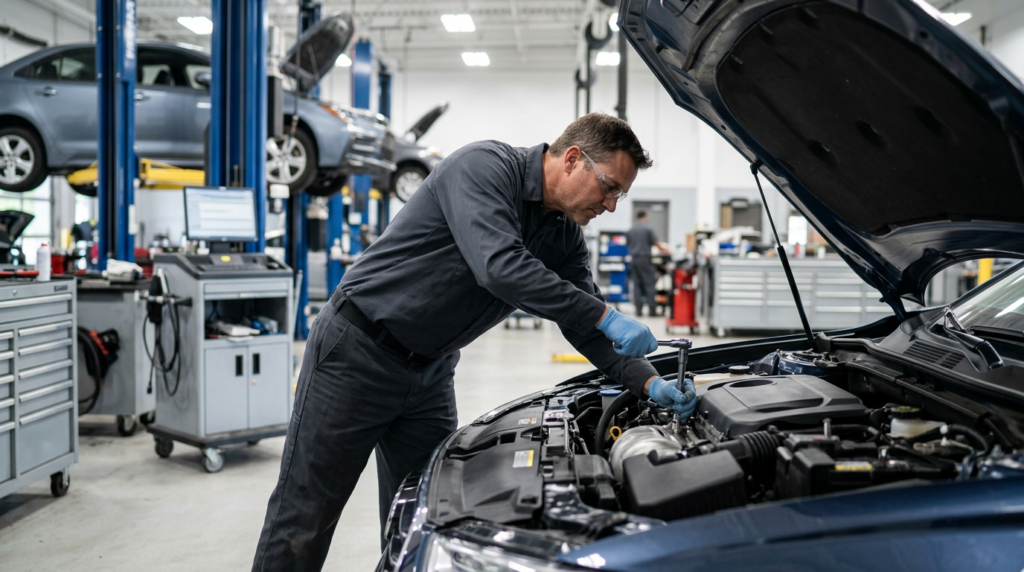
Quick answer: Reliable car repair in Suwanee, GA starts with choosing a shop that can clearly explain the diagnosis, show you the worn parts or test results, and prioritize safety items first. Ask for a written estimate, warranty details, and a realistic timeline. A good shop will recommend maintenance based on mileage and symptoms, not pressure you into extras.
How to Pick a Shop Without Getting Burned
Start by judging communication, not salesmanship. A dependable shop will tell you what they found, how they tested it, and what happens if you wait. They should be comfortable answering basic questions like: “What’s the root cause?” “What are my options?” and “What would you do if it were your car?” If you’re searching for car repair Suwanee GA, look for a place that gives you a written estimate and calls before doing any additional work.
Pay attention to how they handle priorities. Brakes, tires, steering, overheating, and battery/charging issues should be treated as safety or breakdown risks. Cosmetic items and “nice-to-have” flushes can wait. A trustworthy advisor will separate “must do now” from “plan for later” and explain the consequences in plain language.
Also ask what’s included in the diagnostic charge. Many shops apply some or all of it toward the repair, but policies vary. The key is clarity up front so you’re not surprised when the final invoice arrives.
Common Repairs and the Warning Signs to Watch For
Brake problems usually announce themselves: squealing, grinding, vibration in the pedal, or a steering wheel shake under braking. Grinding often means the pads are gone and metal is contacting the rotor, which can raise the repair cost. If the brake warning light is on, or the pedal feels spongy, get it checked soon.
Check-engine lights and rough running can come from anything from a loose gas cap to ignition coils, sensors, or vacuum leaks. A proper scan is only the first step; good diagnosis includes verifying the failure with live data, smoke testing for leaks when needed, and checking basics like fuel trim and misfire counts.
Suwanee driving can be a mix of short trips, stop-and-go traffic, and highway runs, which affects wear patterns. Frequent braking and idling can accelerate brake wear and expose weak batteries or alternators. Hot Georgia summers also put extra load on cooling systems and A/C, so small coolant leaks, weak radiator caps, or tired hoses can turn into overheating faster than you’d expect.
Overheating is one of the fastest ways to damage an engine. Sweet smells, steam, low coolant, or a temperature gauge climbing above normal are red flags. Stop driving if the gauge spikes; towing is usually cheaper than an overheated engine. For suspension and steering, clunks over bumps, uneven tire wear, or wandering at highway speed often point to worn struts, control arms, tie rods, or alignment issues.
What to Ask Before You Approve the Work
Ask for the estimate in writing and make sure it separates parts and labor. Clarify whether parts are OEM, aftermarket, or remanufactured, and why that choice makes sense for your car and budget. For some repairs—like alternators, starters, and certain sensors—part quality can make a big difference in repeat failures.
Get specifics on warranty coverage for parts and labor and what could void it (for example, oil leaks contaminating a belt-driven component). Also ask about turnaround time and whether any steps depend on parts availability. If the car is safe to drive short-term, ask what symptoms would mean “stop driving now.”
If you’re presented with additional recommended maintenance, ask how it was determined: mileage interval, fluid condition, or an observed problem. A reasonable shop can explain the “why” without leaning on vague fear-based language.
What to Do Next
Use this quick checklist before you drop the car off:
1) Write down symptoms, when they happen (cold start, braking, highway speed), and any warning lights.
2) Ask for a written estimate and confirm they’ll call you before any added work.
3) Request the test results or evidence (scan data, photos, measured pad thickness, leak source) that supports the recommendation.
4) Confirm warranty terms for parts and labor, plus what could affect coverage.
5) Confirm the timeline, parts availability, and whether the car is safe to drive while you decide.
Contact Team Ryan Automotive to schedule an inspection or request an estimate.