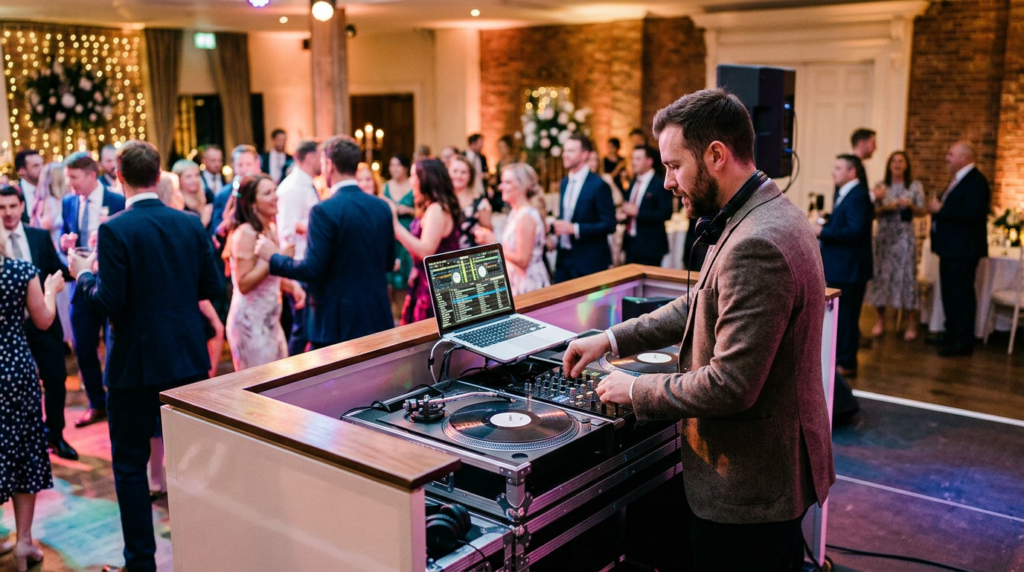
Quick answer: Choose a wedding DJ in London by checking they can comfortably mix across your guests’ ages, can handle requests without derailing the vibe, and have clear plans for sound, setup time, and backup gear. Ask for a sample mix and a real wedding recording, confirm they’ll coordinate with your venue’s rules (sound limiters, access times), and get the schedule and contract terms in writing for speeches, first dance, and finish time.
What to Ask Before You Book
Start with the practical questions that affect your night: Will they bring their own sound system, microphones for speeches, and lighting? How long do they need to set up, and what time do they arrive? A reliable DJ should be able to explain their setup plan clearly and confirm they can work within your venue’s access times, sound limiter rules, and curfew.
Then get specific about music. Ask how they read the room, how they handle requests, and whether they mix live or mainly fade between tracks. A good wedding dj London should be comfortable blending genres without jarring switches, and should be able to describe how they’ll keep energy up after dinner, after the first dance, and late-night when the crowd can change.
Finally, ask about contingency. What happens if a laptop fails, a speaker dies, or they’re delayed? You’re listening for a calm, detailed answer: backup controller or laptop, spare cables, duplicate music library, and a plan for getting sound running fast if something goes wrong.
How to Verify Their Quality Before You Commit
Ask for audio you can judge, not just a highlight reel. Request a 10–15 minute unedited mix sample that reflects the style you want (not a curated montage), and a full-length recording from a real wedding set if they can share one. If video is available, it can help you hear microphone clarity and how announcements sit over background music.
Also ask for references you can contact. A couple of recent couples or a venue coordinator can tell you whether the DJ arrived on time, handled requests politely, and kept speeches and key moments running smoothly.
When you listen, focus on transitions (no awkward dead air or sudden volume jumps), pacing (energy builds naturally instead of peaking too early), and genre shifts (moving from pop to R&B or house without whiplash). If they use a mic, listen for clear speech, sensible volume, and a confident, calm tone rather than constant chatter.
Red Flags That Usually Lead to Stress on the Day
Watch for vague answers on backup plans. “I’ve never had a problem” is not a plan; you want to hear what spares they carry and how quickly they can recover from failure. Another red flag is reluctance to share contract terms in advance or pressure to book without confirming key details like finish time, overtime, and cancellation/rescheduling terms.
If your venue requires PLI or PAT documentation and the DJ can’t provide it (or dismisses it), treat that as a serious issue because it can block them from setting up. Be cautious if they insist on a rigid playlist with no flexibility for the room, or if they refuse reasonable “do not play” requests.
Unclear arrival/setup times can cause knock-on problems with venue access, suppliers, and speeches. If they can’t state when they’ll arrive, how long setup takes, and when sound checks happen, you risk last-minute scrambling.
London Venue Logistics You Should Nail Down
London venues often come with tight loading rules, stairs, limited lift access, and strict sound limiters. Ask the venue: what are the load-in/load-out times, where can suppliers park, are there steps or long corridors, and is there a sound limiter (and where is the microphone for it placed)? Also ask whether you can do a quick sound check and whether the venue provides any in-house PA you must use.
Ask the DJ: can you work with a sound limiter without the music sounding thin, and do you have a plan if the limiter trips? What’s your exact arrival time, setup duration, and space requirement for booth and speakers? If you have multiple rooms (ceremony, drinks, dinner, dancing), confirm whether they can provide separate audio in each space or whether you’ll need a second setup. Plan the handover points: ceremony mics and cues, background music during drinks, speech mics, then a clean switch to dancefloor sound without moving guests into silence.
Next step: confirm in writing the running order (speeches, first dance, last song), arrival and setup times, equipment list (PA, mics, lighting), venue constraints (limiter/curfew/access), and the backup plan. Request any required documents from the venue list (such as PLI and PAT) and make sure the contract clearly states payment schedule, overtime policy, and what happens if timings change.