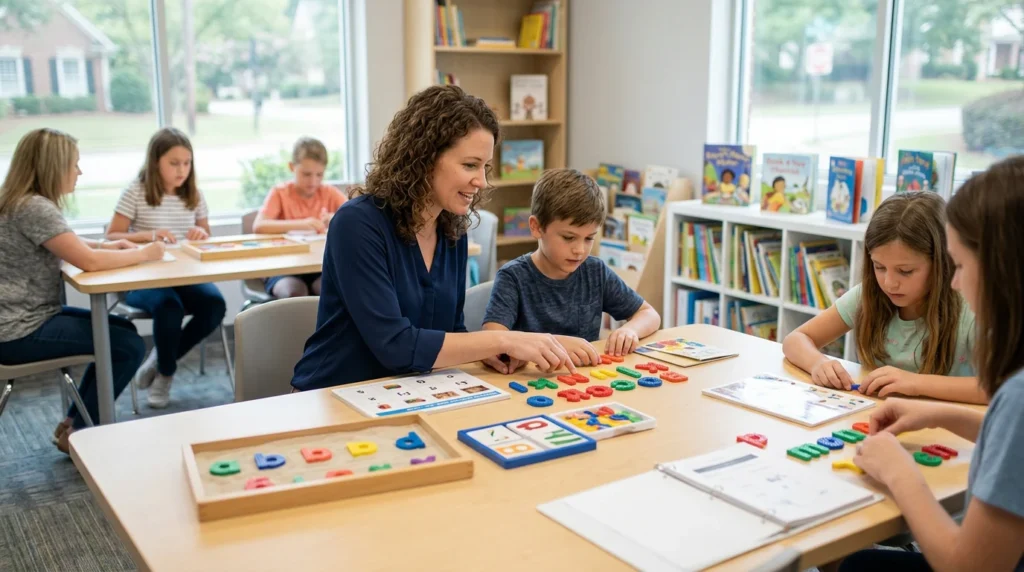
Quick answer: Effective dyslexia support programs in Lawrenceville usually combine a structured, phonics-based approach with frequent practice in reading, spelling, and writing. Look for instruction that is explicit, systematic, and cumulative, with regular progress checks and strategies that build decoding, fluency, and comprehension. The best fit also includes coordination with school accommodations and practical support for confidence and motivation at home.
What Strong Dyslexia Support Should Include
Programs that help most consistently teach reading in a very direct way: sound-by-sound decoding, spelling patterns, and repeated practice that slowly increases difficulty. You should hear terms like “explicit instruction,” “systematic phonics,” and “cumulative review,” because dyslexia responds best to skills taught in a clear sequence rather than guessed through context.
As you compare dyslexia support programs in Lawrenceville, ask how they measure progress. A solid program can explain what they track (accuracy, fluency, spelling patterns, reading stamina) and how often they check it. You also want instruction that connects reading to writing—dictation, sentence building, and spelling—because those skills reinforce each other.
Support should feel targeted, not generic tutoring. If the plan sounds like “read more books and it will click,” keep looking. Dyslexia needs structured teaching plus enough repetition to make skills automatic.
Signs a Program Is a Good Match for Your Child
Fit shows up in the details. A good program can describe your child’s current skill profile (for example, trouble with decoding multisyllable words, slow fluency, weak spelling, or inconsistent comprehension) and explain the next instructional steps. They should also share what a typical session looks like—short, focused skill blocks with guided practice and immediate feedback.
Group size and pacing matter. Some students do best 1:1 at first; others can succeed in a small group if instruction stays individualized. A typical range for effective sessions is 45–60 minutes, multiple times per week, because short, frequent practice often sticks better than a single long weekly meeting.
Watch for emotional fit, too. Dyslexia can come with anxiety or avoidance. The right environment is firm about practice but careful with confidence—celebrating effort, teaching self-advocacy, and normalizing that reading can improve with the right method.
How to Coordinate Support With School and Home
Outside support works best when it lines up with what happens in the classroom. Share key information with your child’s teacher and ask about accommodations that reduce barriers while skills are building. Common examples include extra time, reduced copying, audiobooks or text-to-speech, and not grading spelling on content-heavy assignments when spelling isn’t the target.
At home, keep practice short and predictable. Ten to fifteen minutes of targeted reading or spelling practice on most days can be more helpful than occasional marathon sessions. Choose decodable or controlled texts early on, then gradually add richer books with audio support so your child can keep learning vocabulary and content while decoding catches up.
If homework regularly ends in tears, that’s useful information. It can mean the work is not accessible yet, the accommodations aren’t sufficient, or fatigue is setting in. Bring that feedback to the program and the school team so expectations stay realistic and productive.
Getting Started in Lawrenceville
Before you enroll, ask for a clear explanation of the approach, how placement decisions are made, and what progress updates look like. You should leave the conversation knowing the first skills they’ll target and how you’ll know it’s working. If they can’t describe the method beyond “reading help,” it’s hard to judge quality.
Also ask how they handle co-occurring needs like ADHD, language weaknesses, or handwriting challenges. Dyslexia rarely travels alone, and the best support plans make room for attention, organization, and writing mechanics without losing focus on structured reading instruction.
If you want local guidance and a structured plan, Sage School is a place to get help.