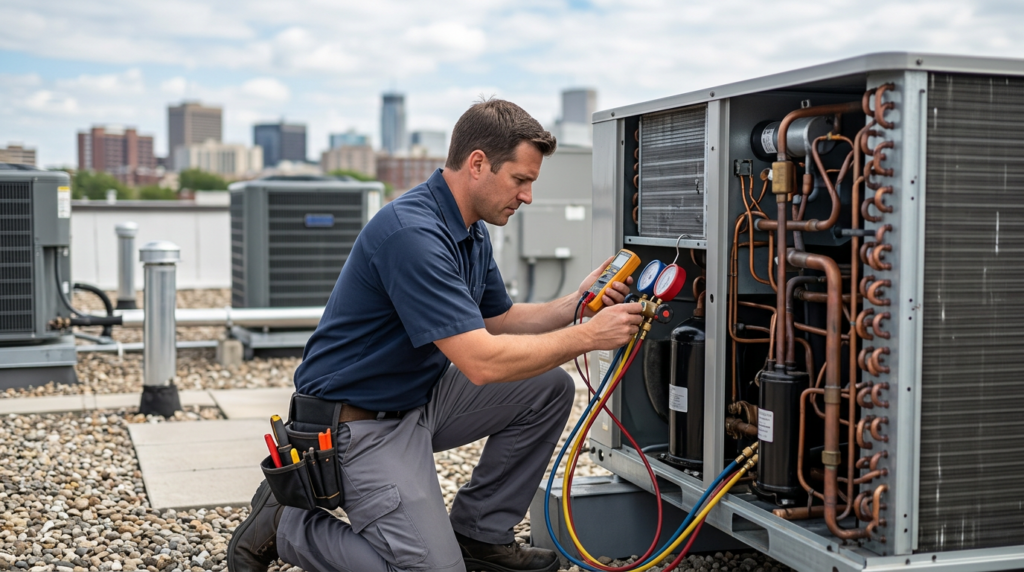
When I first started working with property managers and facilities teams in DuPont, WA, one thing became clear: reliable climate control is more than comfort — it’s about safety, code compliance, uptime, and long-term cost control. That’s why DuPont commercial HVAC services are such an essential part of keeping offices, retail spaces, and warehouses running smoothly, and why I often point clients to guidance from the U.S. Environmental Protection Agency for best practices on energy and air quality when planning upgrades and maintenance.
Why commercial HVAC matters in DuPont, WA
DuPont sits in a busy part of Pierce County with mixed-use properties, light industrial zones, and growing residential neighborhoods nearby. Local buildings face a Pacific Northwest climate with cool, damp winters and mild summers — conditions that can hide hidden energy losses and moisture-related problems. A well-planned commercial HVAC strategy reduces tenant complaints, prevents mold and corrosion, supports inventory and equipment needs, and lowers monthly operating costs. For facility managers in this area, prioritizing HVAC service is a smart operational decision with measurable returns.
Top services commercial HVAC teams provide
From my experience, quality commercial HVAC contractors bundle routine service with strategic upgrades. Typical service areas I recommend you verify when choosing a provider include:
- Preventive maintenance plans for rooftop units, packaged systems, boilers, chillers, and refrigeration equipment.
- Emergency repair services with guaranteed response times to minimize downtime.
- System performance audits, energy use assessments, and recommendations for efficiency upgrades.
- Advanced controls, building automation integration, and smart thermostat installations for zoning and load management.
Common problems I see and how they’re fixed
Facilities in this region often present recurring issues that, if left unaddressed, cause higher bills and more breakdowns. Here are the typical pain points and practical fixes I advise:
Underperforming rooftop units
Rooftop units often accumulate debris, suffer condenser coil fouling, and run with miscalibrated controls. A technician will clean coils, check refrigerant levels, verify airflow, and tune controls. Regular coil maintenance and properly sized economizers can restore efficiency and prevent compressor failures.
Uneven temperatures and tenant complaints
Zoning problems, blocked ductwork, and failing dampers create hot and cold spots. The solution is a diagnostic walkthrough that includes duct leakage testing, damper calibration, and installing variable air volume (VAV) or zone controls. These measures improve comfort and cut energy waste.
Moisture and indoor air quality concerns
Pacific Northwest humidity increases the risk of mold in poorly ventilated spaces. Fresh-air ventilation balanced with dehumidification and proper condensate management reduces mold risk. HEPA filtration upgrades and UV-C lights in HVAC systems can also enhance indoor air quality for medical, educational, or food-related facilities.
How I evaluate a commercial HVAC provider
When you choose a contractor, I recommend a standard checklist I use with clients so you get professional, lasting results:
- Confirm licensed technicians and relevant certifications for commercial refrigeration and HVAC systems.
- Ask for written maintenance plans with clear scopes, response-time guarantees, and emergency contact procedures.
- Request an initial system assessment report that includes expected lifecycle costs, energy-savings estimates, and upgrade recommendations.
- Check references from similar properties in DuPont or nearby areas like Fort Lewis and Steilacoom to ensure local experience.
Trending topics and what they mean for your building
Two major trends are shaping commercial HVAC choices right now, and I want you to be ready for both.
Electrification and heat pump adoption
Buildings are increasingly moving away from fossil-fuel heating toward electric heat pumps, which can provide efficient heating and cooling in our climate. For many businesses, replacing older boilers or electric resistance systems with modern heat pumps reduces emissions and operating costs, especially when paired with smart controls and demand-response programs.
Smart controls and predictive maintenance
IoT-enabled sensors and machine-learning algorithms allow service teams to catch small performance dips before they become failures. Predictive maintenance reduces emergency repairs, lowers parts costs, and extends equipment life. If your building isn’t collecting runtime and fault data yet, consider starting with a gateway that monitors a handful of critical units.
Energy-saving upgrades that pay back fast
I often work with operations teams to prioritize upgrades that give the biggest return on investment in this climate and market. Here are the top three upgrades to consider:
- Variable frequency drives on large fans and pumps to reduce energy use at partial loads.
- High-efficiency motors and modern chillers or packaged units with ENERGY STAR-rated performance.
- Advanced rooftop unit economizers and heat recovery options that capture waste heat for domestic hot water or preheating air.
What a proper maintenance plan looks like
A solid preventive maintenance agreement protects budgets and keeps systems running at peak performance. A comprehensive plan should include scheduled visits with seasonal tune-ups, filter and belt replacements, refrigerant checks, coil cleaning, control calibration, and an annual energy audit. The best plans include documentation and recommendations so you can budget for capital replacements and efficiency upgrades years ahead.
Actionable steps for building managers
If you’re responsible for a commercial property in DuPont or nearby, here are straightforward steps to take in the next 30–90 days to improve HVAC reliability and efficiency:
- Schedule a full-system inspection before the heating season to identify urgent repairs and prioritize upgrades.
- Install or verify proper filtration and ventilation settings to balance air quality with energy use.
- Request a cost-benefit analysis for heat pump conversion or controls upgrades to see realistic payback timelines.
- Document service history and start tracking equipment run-hours to enable predictive maintenance.
Local concerns and compliance to watch for
Washington State has been active on energy codes and appliance efficiency rules, so contractors who know local code updates and permitting requirements will save you time and money. Working with a team familiar with local inspectors and the permitting workflow in Pierce County helps avoid delays during retrofits or system replacements. It also ensures your systems meet ventilation standards for occupant safety and energy compliance.
Emergency readiness and downtime reduction
Unexpected HVAC failures can shut down operations and risk inventory or tenant satisfaction. I recommend facilities implement an emergency plan that includes designated service windows, spare parts inventory for critical components, and prioritized response tiers. Engage a contractor who offers 24/7 emergency response with clear SLAs so you can minimize business interruptions.
Cost expectations and budgeting tips
Commercial HVAC investments vary widely depending on system size, complexity, and whether you’re repairing, replacing, or retrofitting controls. Small rooftop unit repairs may be a few hundred to a few thousand dollars, while chiller replacements or full HVAC overhauls are larger capital projects. To manage cash flow, consider multi-year maintenance agreements, phased upgrades, and local utility rebates or incentive programs that can offset upfront costs.
How I help clients choose the right upgrades
In planning projects, I focus on quick wins and long-term resilience. That means addressing immediate reliability issues first, then evaluating efficiency upgrades with measurable savings. I also push for transparency: clearly documented baselines, projected energy savings, and scheduled follow-ups so stakeholders can see the financial impact. Where possible, I align upgrades with local incentives and utility programs to reduce net cost and improve ROI.
Questions to ask before signing a service contract
When you’re vetting commercial HVAC contractors, these questions help separate surface-level promises from real capabilities:
- Do you provide written response-time guarantees and emergency service commitments?
- Will I receive a detailed system assessment with prioritized recommendations and estimated savings?
- What certifications do your technicians hold for commercial refrigeration, boilers, or controls?
- Can you integrate with our building automation system or provide recommendations for controls upgrades?
Final thoughts and next steps
Keeping commercial HVAC systems reliable and efficient in DuPont, WA requires a blend of regular maintenance, strategic upgrades, and working with teams familiar with local climate and code requirements. Whether you’re managing offices near the freeway, a retail center close to downtown, or industrial space in the surrounding neighborhoods, a proactive approach reduces costs and improves occupant comfort. If you want a clear path forward, start with a comprehensive inspection and an energy-focused plan that prioritizes quick returns and long-term resilience.
If you’re ready to take the next step, I recommend contacting Nextech for a thorough consultation and tailored service plan in DuPont. Nextech